Lisa and ADNP syndrome
June 2, 2026
- daddylog
- adnp
- neurodiversity
- accessibility
- research
In short
From the first embrace I embraced everything about her — including a rare diagnosis that changed the way I see the world
From the first embrace
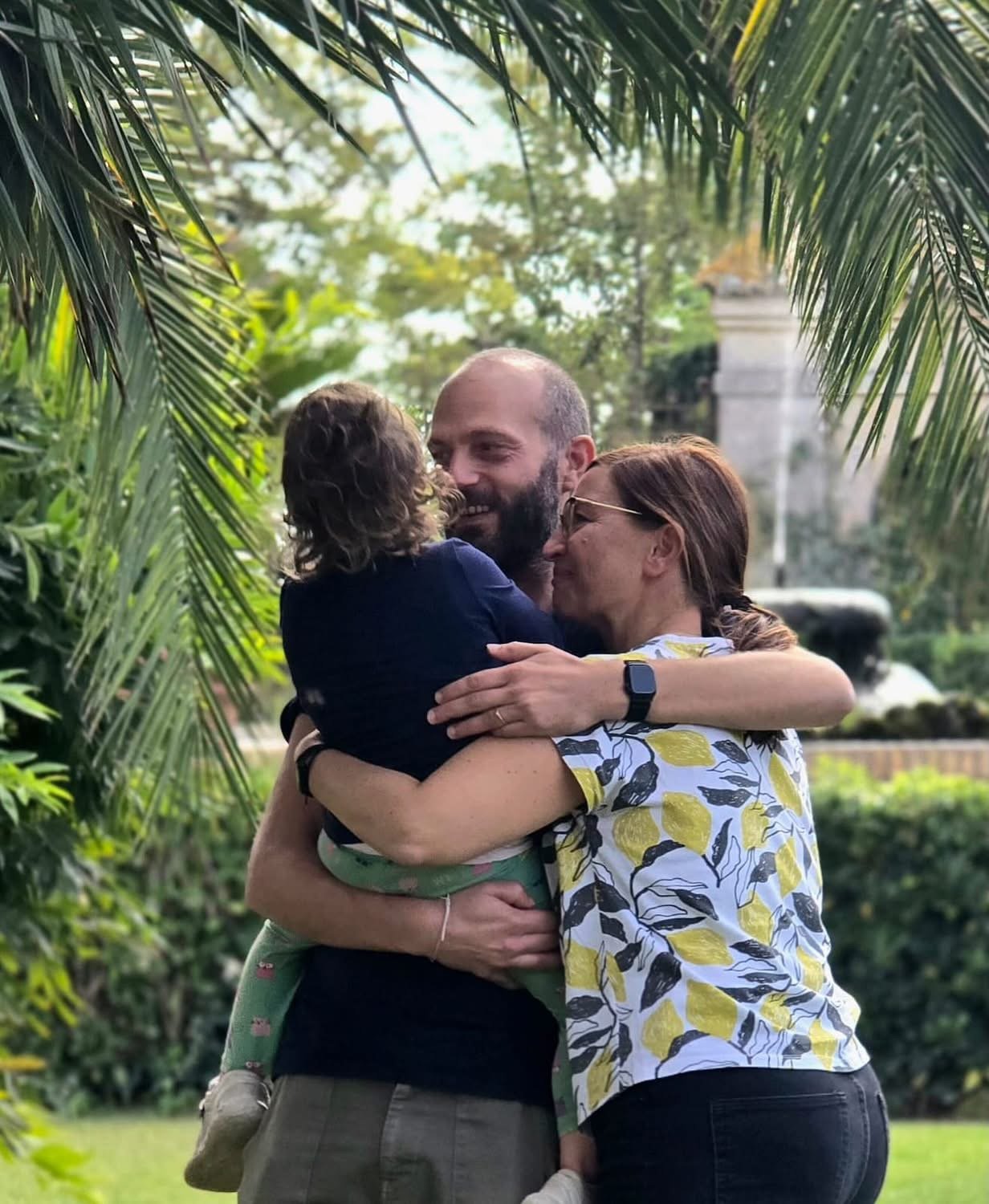
From the first embrace I gave Lisa, I embraced everything about her.
Including ADNP syndrome: an extremely rare genetic condition affecting neurological development, which we received a diagnosis for some time ago.
Lisa is one of approximately 36 known cases in Italy, and approximately 600 worldwide.
The red thread running through this site
If you’ve ever wondered why I write so often about accessibility, neurodiversity, and cognitive load — the answer has a name.
Her name is Lisa.
Her condition changed the way I observe design, communication, and technology. Not as an abstract theme, but as a daily practice: how we read, how we process, how we access the world when our brain works differently.
It’s no coincidence that I write about cognitive overload, about interfaces that don’t exhaust you, about tools built with neurodiversity in mind. It all comes from her.
What is ADNP syndrome
ADNP syndrome — also known as Helsmoortel-Van der Aa syndrome — is caused by a de novo mutation in the ADNP gene (Activity-Dependent Neuroprotective Protein), located on chromosome 20.
De novo means the mutation is not inherited from parents, but arises spontaneously during embryonic development.
The ADNP gene produces a protein essential for brain formation: it regulates the expression of hundreds of other genes during early neurological development. When this process is disrupted, the consequences affect cognitive development, language, muscle tone, and behavior.
The syndrome was first described in 2014 in a study published in Nature Genetics by Helsmoortel and colleagues, identifying it as one of the most frequent single-gene causes of autism — while remaining extremely rare in absolute numbers.
Main manifestations
- autism spectrum characteristics
- intellectual disability of varying degree
- language and communication delays
- hypotonia (reduced muscle tone)
- sleep difficulties
- in some cases, epilepsy
The numbers
- known cases worldwide
- ~600
- known cases in Italy
- ~36
- year of discovery
- 2014
These numbers say everything and nothing at the same time.
They say that Lisa has very few peers in the world. They also say that research is still young — and that every contribution carries much more specific weight than it would for more common conditions.
Research needs visibility
ADNP Italia is the association that brings together Italian families, supports scientific research, and builds connections with international research centers.
They’ve launched a fundraising campaign to support research on the syndrome. For conditions this rare, large public funding doesn’t come — support comes from the community.
Support the research: GoFundMe campaign →
5×1000 — if you file taxes in Italy:
This is an Italian mechanism that lets you direct 0.5% of your income tax to a nonprofit — at no extra cost to you. On your tax return (730, Modello Unico or CUD), sign the space for ONLUS organisations and write ADNP Italia’s fiscal code:
92037650121
The state foregoes that share; it goes directly to research instead.
Learn about ADNP Italia: adnpitalia.it →
Even sharing this post helps: the more people know about the syndrome, the further research can go.
For Lisa
Writing about Lisa is never simple.
But this time it’s different — because I’m not writing to process, I’m writing to do something concrete.
If you’ve found something useful in what I write here, know that everything — the attention to accessibility, the respect for neurodiversity, the care not to overwhelm the reader — comes from her.
💛